In the fast-paced world of metabolic research, where scientists are constantly pushing boundaries to tackle issues like obesity, diabetes, and age-related decline, SLU-PP-332 has emerged as a standout innovation. This synthetic small-molecule acts as a pan-ERR agonist, effectively mimicking the benefits of exercise by activating estrogen-related receptors (ERRs) to enhance energy metabolism, mitochondrial function, and fat oxidation—all without the need for actual physical activity. If you’re a researcher diving into topics like “SLU-PP-332 benefits,” “SLU-PP-332 exercise mimetic effects,” or “SLU-PP-332 research updates 2025,” this detailed exploration covers everything from its chemical makeup to the latest preclinical findings. Originally developed at Saint Louis University by Dr. Thomas Burris and his team (now at the University of Florida), SLU-PP-332 shows strong affinity for ERRα (EC50 around 98 nM) and holds exciting potential for models of cardiometabolic health and muscle preservation. Remember, this is strictly a research compound—not approved by the FDA for human use or any therapeutic applications. Always prioritize lab safety and ethical protocols.
Unpacking SLU-PP-332: Its Chemical Profile and Development Story
At its core, SLU-PP-332 is known chemically as 4-Hydroxy-N’-(2-naphthylmethylene)benzohydrazide, with a molecular formula of C₁₈H₁₄N₂O₂ and a mass of about 290.32 g/mol. The structure includes a benzohydrazide backbone connected to a naphthyl moiety, which allows it to potently engage ERRα, ERRβ, and ERRγ—these are orphan nuclear receptors that drive metabolic gene expression without triggering unwanted estrogen-like effects. First highlighted in 2023 studies as a potential “exercise pill,” it’s designed to target PGC-1α, the powerhouse regulator behind mitochondrial biogenesis and energy homeostasis.
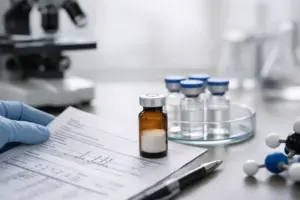
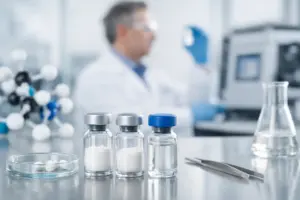
In lab settings, it typically comes as a white to off-white powder in vials ranging from 5-50 mg, boasting purity levels over 99% when sourced from trusted suppliers. For those querying “buy SLU-PP-332 for research,” focus on vendors that provide certificates of analysis (COA) to ensure quality. From our experience at Synthesis Peptides, handling it involves standard reconstitution with bacteriostatic water and storage in a cool, dry place to maintain stability.
The Science Behind It: How SLU-PP-332 Simulates Exercise
What makes SLU-PP-332 so intriguing is its ability to bind ERRs and kickstart gene networks involved in fatty acid breakdown, mitochondrial optimization, and muscle adaptation. It essentially flips the switch to an “aerobic exercise mode,” ramping up PGC-1α to multiply mitochondria and favor fatigue-resistant muscle fibers like type I and IIa. In rodent models, this leads to a 10-15% spike in energy burn and better insulin response, all while keeping appetite and daily activity unchanged.
Breaking down the key mechanisms for anyone searching “SLU-PP-332 mechanism of action”:
- ERR Pathway Activation: Triggers metabolic gene transcription, echoing the effects of endurance workouts.
- Boosting Mitochondrial Biogenesis: Elevates ATP output and curbs reactive oxygen species (ROS) through PGC-1α.
- Enhancing Fat Metabolism: Drives beta-oxidation for reduced fat accumulation in obesity simulations.
- Supporting Cardiac Resilience: In heart failure setups, it bolsters ejection fraction and minimizes fibrosis by revitalizing mitochondrial health.
Compared to something like SS-31, which zeros in on mitochondrial protection, SLU-PP-332 delivers a more holistic metabolic shift—making it a great candidate for combo studies in our lab explorations.
Key Benefits Explored in Preclinical Models
As we hit late 2025, fresh data underscores SLU-PP-332’s versatility in addressing metabolic challenges. Drawing from recent studies, here’s a closer look at its observed advantages:
- Obesity and Weight Control: In high-fat diet mouse models, it slashes fat mass by 12-20% through amplified fat burning and energy utilization.
- Diabetes and Insulin Dynamics: Improves glucose handling and sensitivity, offering insights for type 2 diabetes research without impacting hunger cues.
- Muscle Strength and Anti-Sarcopenia: Boosts endurance by up to 45% and promotes myotube growth, countering age-related muscle loss.
- Heart Health Support: Restores metabolic balance in cardiac models, enhancing function and reducing scarring.
- Longevity and Anti-Aging Potential: By fortifying mitochondria against oxidative stress, it may extend cellular health in aging simulations.
These insights stem from animal and cell-based work—human trials are still on the horizon, but the momentum is building.
Fresh Insights: 2025 Research and Studies on SLU-PP-332
Heading into 2025, SLU-PP-332 is gaining traction in top journals. A July 2025 PubMed entry explores its role in combating age-related muscle atrophy via ERR targeting, showing enhanced myotube differentiation. Meanwhile, a Nature review from the same year discusses pan-ERR agonists like SLU-PP-332 and its sibling SLU-PP-915 for signaling pathways in health and disease. Earlier 2024 work in PubMed confirmed its exercise-mimicking prowess for metabolic syndrome relief. For “SLU-PP-332 studies 2025,” PubMed is seeing more entries on ERR agonists, hinting at broader applications.
Here’s a quick summary table of notable findings:
|
Study Focus
|
Key Outcomes
|
Publication Year/Source
|
|
Muscle Atrophy Counteraction
|
Promoted myotube formation and differentiation
|
2025 / PubMed
|
|
Nuclear Receptor Signaling
|
Synthesized agonists for metabolic pathways
|
2025 / Nature
|
|
Metabolic Syndrome Relief
|
Exercise-like benefits for disease treatment
|
2024 / PubMed
|
Practical Lab Guide: Dosage, Handling, and Considerations
From lab anecdotes and protocols, SLU-PP-332 is often dosed at 100-800 mcg daily for preliminary effects, ramping to 1-5 mg in metabolic assays—via oral or subcutaneous routes. In mice, think 50 mg/kg intraperitoneal for robust results. Reconstitute carefully with bacteriostatic water and refrigerate to preserve potency. Side effects in models are minimal, but keep an eye on metabolic markers.
At Synthesis Peptides, we supply research-grade versions with full COA—perfect for those typing “SLU-PP-332 dosage in research.” Always verify purity and comply with regulations.
How It Stacks Up: SLU-PP-332 vs. Other Peptides
- Vs. SS-31: Broader ERR-driven metabolism here, versus SS-31’s direct mitochondrial fix—ideal partners for energy-focused experiments.
- Vs. Epithalon: Metabolic mimicry trumps telomere tweaks; SLU-PP-332 shines in endurance models.
- Vs. CJC-1295 + Ipamorelin: Avoids growth hormone pitfalls, focusing on clean ERR activation.
Common Questions About SLU-PP-332
- What are the top SLU-PP-332 benefits in research? Mainly fat loss, insulin improvement, and muscle endurance in models.
- Can humans use SLU-PP-332? Absolutely not—it’s for lab research only, with no clinical green light.
- How does it mimic exercise? By activating molecular pathways for energy and mitochondria, but it doesn’t cover all perks like mood boosts from real workouts.
- What’s new in 2025? Emphasis on muscle atrophy and cardiac applications in fresh reviews.
Wrapping Up: Why SLU-PP-332 Is Shaping the Future of Metabolic Studies
As 2025 unfolds with new data on its anti-atrophy and signaling roles, SLU-PP-332 is proving indispensable for probing exercise mimetics and extending healthspan in models. Whether you’re investigating obesity interventions or cardiac resilience, its implications are profound—but stick to rigorous, ethical lab practices. At Synthesis Peptides, we’ve seen firsthand how compounds like this spark innovative protocols.
Disclaimer: This piece draws from published research for educational purposes only. SLU-PP-332 is exclusively for laboratory research, not for human intake, diagnosis, or treatment. None of these statements have been evaluated by the FDA; always seek expert guidance.
Once in your PDF tool, you can format headings as bold/large font, add images, and adjust layout for a professional look. If you need help finding free stock images (e.g., from Unsplash or Pixabay for “chemistry lab” or “molecular structure”), let me know!